Vertical Aquaponics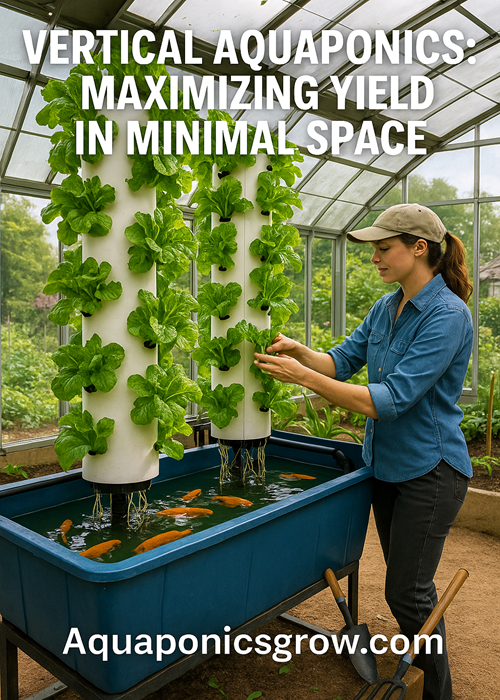
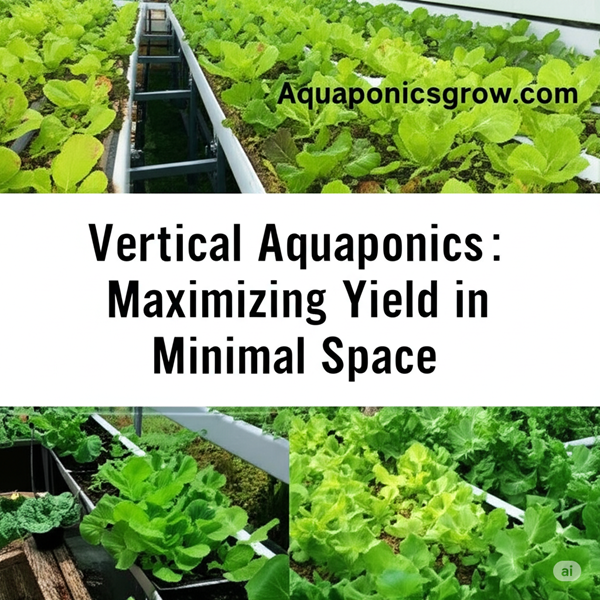
Vertical Aquaponics: Maximizing Yield in Minimal Space
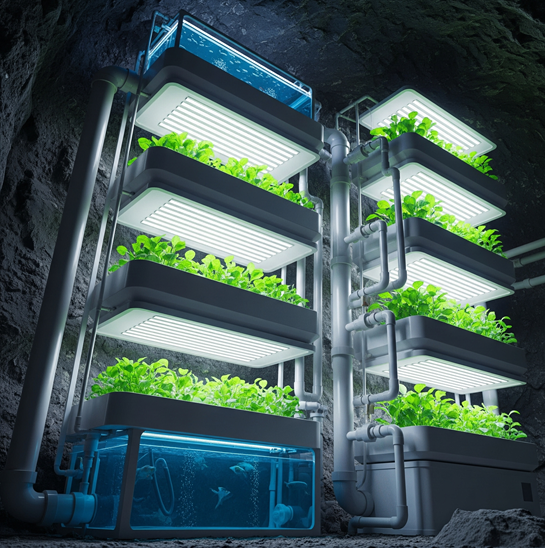
Using Vertical aquaponics merges aquaculture and hydroponics into a space-efficient, closed-loop ecosystem, enabling growers to produce both fish and plants in stacked layers. By circulating nutrient-rich water from fish tanks through vertical grow towers, this method achieves 90% water efficiency compared to traditional agriculture while doubling crop yields per square foot. Ideal for urban environments, vertical systems transform underutilized spaces into productive food sources through precise engineering and biological synergy.
Core Components of Vertical Aquaponics Systems
| Component | Role | Best Options | Pros | Cons |
| Fish Tank | Houses fish, generates waste | Fiberglass, polyethylene | Durable, chemical-resistant | Requires insulation for temp control |
| Grow Towers | Vertical plant columns | PVC pipes, NFT channels | Space-efficient, customizable height | Root intrusion risks without screens |
| Water Pump | Circulates nutrient solution | Magnetic drive, submersible | Energy-efficient, quiet operation | Clogging from debris without filters |
| Biofilter | Converts ammonia to nitrates | Moving bed, trickling | Supports bacterial colonization | Requires periodic media replacement |
| Distribution Manifold | Balances water flow | Adjustable multi-port | Precise flow control per tower | Complex calibration for beginners |
Advantages of Vertical Aquaponics Architecture
Space Optimization
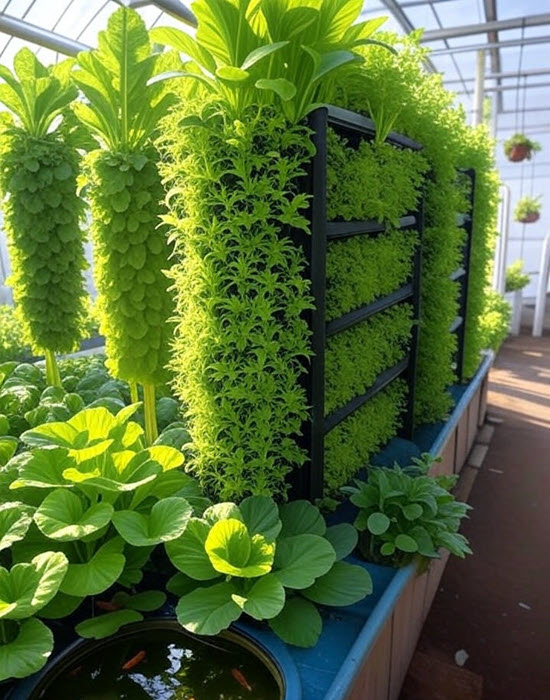
Vertical stacking enables 2–3x higher plant density than horizontal systems, making it feasible to grow 200+ lettuce heads annually in a 5’×3′ footprint. Commercial operations using A-frame towers report 10–20x higher yields per acre compared to soil farming.
Resource Efficiency
-
- Water Use: Recirculates 95% of water, consuming 1/10th the volume of soil agriculture.
- Energy: Solar-powered pumps reduce grid dependence, with 0.8–1.2 kWh/day consumption for 100 sq ft setups3.
- Nutrients: Fish waste provides 70–90% of plant nitrogen needs, eliminating synthetic fertilizers.
Dual Harvest Potential
Tilapia and trout reach market size (1–1.5 lbs) in 6–8 months while simultaneously producing leafy greens every 3–4 weeks.
System Design Principles
Tower Configuration
-
- Slope: Maintain 1:30 to 1:40 gradient (1″ drop per 30–40″ length) to prevent stagnation or rapid flow.
- Spacing: Allow 6–8″ between tower plants for light penetration and airflow.
- Height: Limit towers to 6–8′ to avoid nutrient depletion at lower levels.
Pump Sizing
Calculate flow rate using:
GPH=System Volume (gallons)×1.5GPH=System Volume (gallons)×1.5
For vertical lift (head height), select pumps exceeding calculated GPH by 15–20%.
Click Here – See our Pump Sizing Calculator
Fish-to-Plant Ratio
Stock 1 lb of fish per 5–7 gallons of water, ensuring nitrate levels stay below 150 ppm for plant health.
Click Here – See our Fish Stocking Density Calculator
Optimized Growth Protocols
Plant Selection
| Crop Type | Recommended Varieties | Harvest Timeline |
| Leafy Greens | Buttercrunch lettuce, kale | 3–4 weeks |
| Herbs | Basil, mint, cilantro | 4–6 weeks |
| Fruiting Plants | Cherry tomatoes, strawberries | 8–10 weeks |
Fish Stocking
-
- Tilapia: Thrive at 75–85°F, reach 1.5 lbs in 6 months.
- Trout: Require cooler water (55–65°F), ideal for temperate climates.
- Koi: Ornamental option producing 200–300 ppm nitrates weekly.
Maintenance Routines
Daily Checks
● Verify pump operation and tower flow rates
● Remove debris from pre-filters
● Monitor fish feeding behavior
Weekly Tasks
○ Test pH (6.8–7.0), ammonia (<0.25 ppm), nitrates (30–100 ppm)
○ Harvest mature plants to prevent overcrowding
○ Clean air stones and pump intakes
Monthly Deep Clean
● Flush towers with 3% hydrogen peroxide solution
● Replace 20–30% of system water
● Inspect plumbing for biofilm buildup
Troubleshooting Common Issues
Uneven Water Flow
-
- Cause: Pressure imbalances in distribution manifold
- Fix: Install flow control valves and 200-micron mesh screens.
Root Intrusion
-
- Cause: Aggressive plant roots blocking channels
- Prevention: Use root barriers and trim roots biweekly.
Fish Stress
-
- Symptoms: Gasping at surface, reduced feeding
- Solution: Increase aeration, check ammonia levels, reduce stocking density.
Frequently Asked Questions (FAQs): Addressing Vertical Aquaponics Concerns
How much sunlight do vertical towers need?
Provide 14–16 hours of light daily, ideally using LED grow lights rated at 30–40 watts per square foot with a spectrum focused around 600–700 nm.
-
Why this matters: In vertical systems, natural sunlight often doesn’t reach all levels evenly. Supplemental lighting ensures every plant gets what it needs for healthy growth and high yields.
-
LED grow lights: These are energy efficient, long-lasting, and can be tuned to the specific red (around 660 nm) and blue (around 460 nm) wavelengths that plants use for photosynthesis.
-
Light schedule: Use a timer to maintain a consistent 14–16 hour photoperiod, especially for leafy greens and herbs.
-
Tip: Position lights so each layer of your tower receives even coverage—side-mounted or strip LEDs often work best for vertical setups.
Can I use rainwater in my system?
Yes, but filter it to 50 microns and UV-treat it to eliminate pathogens before adding to your system.
-
Filtration: Pass rainwater through a 50-micron filter to remove fine particles, debris, and potential contaminants.
-
UV treatment: Use a UV sterilizer to neutralize bacteria, viruses, and other pathogens without chemicals, keeping your fish and plants safe.
-
Why it’s important: Rainwater can pick up dust, pollen, bird droppings, or even pesticides from roofs and gutters. Proper treatment ensures water quality and biosecurity for your aquaponics system.
-
Extra step: Test rainwater for pH, ammonia, and heavy metals, especially if you’re collecting from urban or agricultural areas.
What’s the optimal tower material?
Use food-grade PVC or UV-resistant polypropylene, and avoid materials that could leach BPA or other harmful chemicals.
-
Food-grade PVC: Certified safe for food and water use, resistant to chemical leaching, and durable for long-term use in aquaponics.
-
UV-resistant polypropylene: Another excellent option, especially for systems exposed to sunlight, as it won’t degrade or become brittle over time.
-
BPA-free: Always check that your materials are BPA-free and rated for potable water or food contact.
-
Why it matters: Non-food-grade plastics or those containing BPA can leach harmful substances into your water, risking plant, fish, and human health.
-
Tip: Look for NSF-51 or FDA-approved materials for peace of mind.
Wrap-Up
Vertical aquaponics redefines urban food production, transforming balconies, rooftops, and vacant lots into high-yield ecosystems. By mastering flow dynamics, component selection, and maintenance rhythms, growers achieve year-round harvests with minimal inputs. As climate uncertainty intensifies, these systems offer a scalable solution for food resilience, merging ancient symbiosis with modern engineering.