 IBC Tote Aquaponics
IBC Tote Aquaponics: Transforming Industrial Containers into Productive Ecosystems
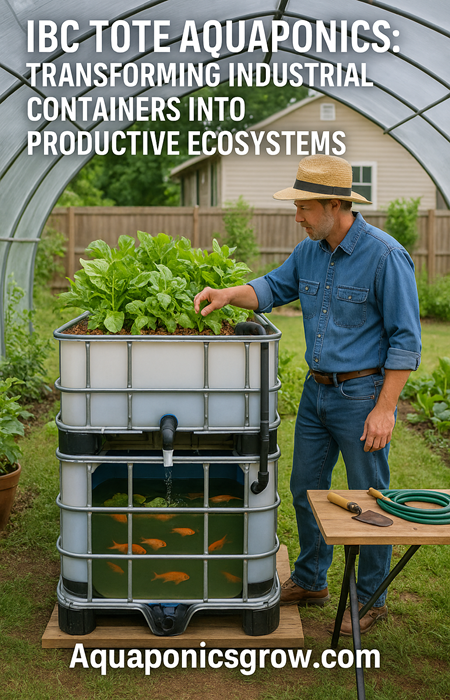
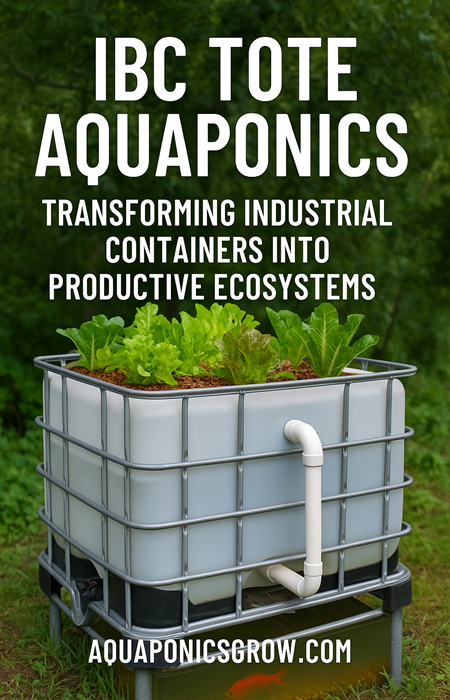
The IBC (Intermediate Bulk Container) tote aquaponics repurposes industrial-grade containers into closed-loop systems that synergize fish cultivation with soil-less plant production.
By converting 275–330 gallon totes into integrated fish tanks and grow beds, this method achieves 90% water efficiency while yielding 2–3x more produce per square foot than traditional gardening. Ideal for urban and small-scale growers, IBC systems offer modularity, cost-effectiveness, and scalability.
Core Components of IBC Tote Systems
| Component | Role | Best Options | Pros | Cons |
| IBC Tote | Dual-purpose tank & grow bed | Food-grade polyethylene | Durable, UV-resistant, stackable | Requires thorough cleaning |
| Bell Siphon | Automated flood/drain cycling | PVC or ABS assemblies | Energy-free operation | Precision calibration required |
| Submersible Pump | Circulates water | 300–500 GPH capacity | Efficient nutrient delivery | Susceptible to debris clogging |
| Grow Media | Supports plant roots | Hydroton, lava rock | Optimal aeration, pH neutrality | Initial cost (~$40/40 lb bag) |
| Air Pump | Oxygenates water | 5–10 W diaphragm | Prevents fish stress | Requires regular diaphragm checks |
Advantages of IBC Tote Architecture
Space and Cost Efficiency
A single 275-gallon IBC tote (45″L × 45″W × 48″H) provides 150 gallons for fish and 125 gallons for grow beds, producing 40–60 lbs of tilapia annually alongside leafy greens. Repurposed totes cost $75–$200 vs. $1,000+ for commercial systems.
Modular Scalability
Totes can be stacked vertically or linked horizontally, enabling hobbyists to expand production incrementally. Commercial operations report 30% lower infrastructure costs compared to traditional setups.
Water Conservation
Recirculating systems use 90% less water than soil gardening, with evaporation losses as low as 1–2% weekly.
System Design and Construction
Tote Preparation
-
- Sanitization: Pressure-wash with 3% hydrogen peroxide to remove residual chemicals.
- Cutting: Use an angle grinder to separate the tote into a 2:1 ratio – lower ⅔ for fish, upper ⅓ flipped as grow bed.
- Light Blocking: Paint outer surfaces black or wrap in UV-resistant materials to inhibit algae growth.
Plumbing Configuration
-
- Bell Siphon: Size standpipes to 1″ diameter per 10 ft² grow area, maintaining 1:40 slope for reliable drainage.
- Pump Sizing: Calculate flow rate using:
GPH=Fish Tank Volume×1.5GPH=Fish Tank Volume×1.5
Example: 150-gallon tank requires 225 GPH pump5.
Grow Bed Setup
-
- Media Depth: 12″ for root crops (kale, tomatoes), 8″ for greens (lettuce, herbs).
- Plant Spacing: 6–8″ between seedlings to prevent overcrowding.
Optimized Biological Parameters
Fish Stocking Guidelines
| Species | Temperature Range (°F) | Stocking Density | Harvest Timeline |
| Tilapia | 75–85 | 1 lb/5 gallons | 6–8 months |
| Trout | 55–65 | 1 lb/7 gallons | 9–12 months |
| Koi | 50–75 | 1 lb/10 gallons | Ornamental |
Water Chemistry Targets
-
- pH: 6.8–7.2 (balance fish/plant needs)
- Ammonia: <0.25 ppm
- Nitrates: 30–100 ppm
Maintenance Protocols
Daily Tasks
● Verify pump operation and siphon cycles
● Remove debris from pre-filters
● Monitor fish feeding behavior
Weekly Checks
○ Test pH, ammonia, nitrites, nitrates
○ Harvest mature plants to prevent overcrowding
○ Clean air stones and pump intakes
Monthly Upkeep
● Flush grow beds with H₂O₂ solution (3%)
● Replace 20–30% of system water
● Inspect plumbing for biofilm buildup
Troubleshooting Common Failures
| Symptom | Likely Cause | Solution |
| Bell siphon not priming | Air leaks in seal | Apply silicone grease |
| Fish gasping at surface | Low dissolved oxygen | Increase aeration |
| Yellowing leaves | Iron deficiency | Add chelated iron (0.5 ppm) |
| Algae blooms | Light exposure | Paint tote black or install covers |
| Uneven water flow | Clogged pipes | Install 200-micron mesh screens |
Frequently Asked Questions (FAQs): Optimizing IBC Tote Aquaponics
How do I prevent algae growth in my IBC tote system?
Block light infiltration using these methods:
-
Paint the exterior with UV-resistant black paint (avoid interior painting to prevent chemical leaching).
-
Wrap the tote in light-blocking materials like black plastic or specialized IBC covers.
-
Ensure grow beds have 1–2″ of dry media (e.g., clay pebbles) on top to shield roots from light exposure.
What pump size is ideal for a 275-gallon IBC system?
Calculate flow rate using:
GPH = Fish Tank Volume × 1.5
-
For a 150-gallon fish tank, use a 225–250 GPH pump.
-
Add a 15–20% buffer for head height (vertical lift from tank to grow beds).
-
Example: A 275-gallon system needs a ~400 GPH pump after accounting for head loss.
Can IBC totes be used outdoors year-round?
Yes, with insulation:
-
In winter, wrap tanks in foam boards or thermal blankets to maintain water temps above 55°F.
-
Use submersible heaters (solar-powered preferred) for extreme cold.
-
Position totes in sunny, wind-sheltered spots to maximize passive solar heating.
How many fish can I stock in a 275-gallon IBC system?
Follow the 1 lb of fish per 5–7 gallons rule:
| Fish Type | Stocking Density | Harvest Size |
|---|---|---|
| Tilapia | 30–40 juveniles | 1–1.5 lbs |
| Trout | 20–30 juveniles | 1–2 lbs |
-
Never exceed 1 lb of fish per 5 gallons to avoid ammonia spikes.
How often should I cycle water in a media-based IBC system?
Maintain 1–2 flood/drain cycles per hour:
| Plant Stage | Flood Duration | Drain Interval |
|---|---|---|
| Seedlings | 15 minutes | Every 45 minutes |
| Mature plants | 20 minutes | Every 90 minutes |
-
Use a timer-controlled pump for precision.
-
Adjust cycles based on plant type:
-
Leafy greens: 1–2 cycles/hour
-
Fruiting plants: 2–3 cycles/hour during peak growth.
-
Wrap-Up
IBC tote aquaponics democratizes sustainable food production, transforming industrial cast-offs into high-yield ecosystems. By mastering flow dynamics, light management, and fish-plant symbiosis, growers achieve year-round harvests with minimal inputs. Whether scaling for commercial use or sustaining a family, these systems prove that innovation thrives at the intersection of simplicity and efficiency.