 Deep Water Culture Aquaponics
Deep Water Culture Aquaponics: Master the Floating Garden System That Actually Works
| Component | Basic Setup | Professional Setup | Commercial Setup | Best For |
| Raft Material | Foam board | Expanded polystyrene | Food-grade foam | Budget builds, learning |
| Net Pots | 2-3 inch plastic | 3-4 inch mesh | Heavy-duty mesh | Small plants, herbs |
| Air Stones | Single aquarium stone | Multiple diffusers | Industrial aerators | Oxygenation levels |
| Water Depth | 6-8 inches | 8-12 inches | 12-18 inches | Root development |
What Makes Deep Water Culture Special
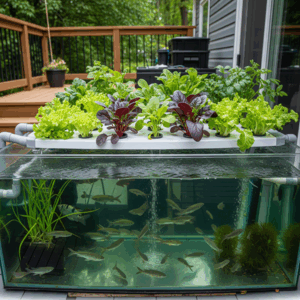
Deep Water Culture (DWC) is the simplest and most productive method in aquaponics. Your plants sit in floating rafts with their roots dangling directly in nutrient-rich water that’s constantly aerated. No growing media, no complex plumbing—just plants, water, and fish working together.
The system works because plant roots get direct access to dissolved nutrients from fish waste, while constant aeration prevents root rot. It’s like hydroponic growing, but the fish provide all the fertilizer naturally. Most commercial aquaponics operations use DWC because it’s reliable, scalable, and produces incredible yields.
What’s really great about DWC is how forgiving it is. The large volume of water buffers against pH swings and nutrient fluctuations. Plants grow fast because they never experience drought stress, and the constant water flow means nutrients are always available.
Why DWC Beats Other Aquaponics Methods
Once you understand how DWC works, it’s easy to see why so many successful growers choose this method over media beds or NFT systems.
- Faster plant growth: Roots get direct nutrient access without competing with growing media for space.
- Higher yields per square foot: You can pack plants closer together on floating rafts.
- Lower maintenance: No clogged growing media to clean or replace.
- Better root health: Constant aeration prevents anaerobic conditions that kill roots.
- Easier harvesting: Pull plants right out of net pots without digging through media.
- Cost effective: Foam rafts and net pots cost way less than tons of clay pebbles.
- Perfect for leafy greens: Lettuce, spinach, and herbs absolutely thrive in DWC systems.
Setting Up Your DWC System Right
Getting your deep water culture system built correctly from the start saves you headaches later. The key is creating proper water circulation, adequate aeration, and stable floating rafts.
Fish tank requirements:
-
- Use at least 100 gallons for stable water chemistry
- Rectangle tanks work better than round ones for raft placement
- Keep fish density at 1 pound per 10 gallons maximum
- Install drain valves at the bottom for easy cleaning
Grow bed design:
-
- Build rectangular beds 12-18 inches deep for good root space
- Use food-grade materials only—avoid treated lumber or toxic plastics
- Install water inlets at one end and outlets at the other
- Size your beds for 1-2 square feet per plant, depending on variety
Raft construction tips:
-
- Cut 1-2 inch thick expanded polystyrene foam boards to fit your beds
- Drill holes 6-8 inches apart for net pots (spacing depends on plant size)
- Sand rough edges smooth to prevent damage to plant roots
- Test rafts in water before adding plants—they should float level
Aeration: The Make-or-Break Factor
Oxygen is absolutely critical in DWC systems. Without proper aeration, plant roots suffocate and die within hours. You need way more air than you think.
Air pump sizing:
-
- Use at least 1 watt of air pump power per gallon of water
- Size up rather than down—you can’t have too much aeration
- Linear diaphragm pumps work better than cheap aquarium pumps for larger systems
- Install backup pumps—losing aeration kills everything fast
Air stone placement:
-
- Place air stones every 2-3 feet along the bottom of grow beds
- Use fine-bubble diffusers for maximum oxygen transfer
- Position stones to create gentle water circulation without disturbing roots
- Replace air stones every 6-12 months as they clog with mineral deposits
Signs of poor aeration:
-
- Plant roots turn brown or black
- Rotten egg smell from anaerobic bacteria
- Plants wilt even though roots are in water
- Algae blooms from lack of water movement
Plant Selection for DWC Success
Not every plant works well in deep water culture. Stick with varieties that thrive in constantly moist conditions and don’t need extensive root support.
Perfect DWC plants:
-
- Lettuce varieties: Buttercrunch, romaine, oak leaf, and red leaf all excel
- Leafy Asian greens: Bok choy, tatsoi, mizuna, and Chinese cabbage
- Herbs: Basil, cilantro, parsley, and mint grow incredibly fast
- Spinach and arugula: Handle cooler water and grow quickly
Good secondary choices:
-
- Swiss chard and kale (need more space between plants)
- Green onions and chives (easy and productive)
- Watercress and other aquatic greens
- Small pepper plants (with extra support)
Plants to avoid in DWC:
-
- Root vegetables like carrots or radishes
- Large fruiting plants like tomatoes or cucumbers
- Plants that need dry periods between watering
- Anything that requires physical root support
Water Management That Works
Managing water quality in DWC systems requires attention to several key factors. The good news is that the large water volume makes the system more stable than other methods.
Optimal water parameters:
-
- pH: 6.0-7.0 (sweet spot is 6.5 for most plants)
- Dissolved oxygen: 6+ ppm (critical for root health)
- Water temperature: 65-75°F for most crops
- Nitrates: 30-50 ppm for good plant growth
Water circulation basics:
-
- Turn over the entire system volume at least once per hour
- Use submersible pumps rated 20% higher than your calculated needs
- Install ball valves to control flow rates between beds
- Keep water moving but avoid creating strong currents that damage roots
Nutrient management:
-
- Fish waste provides most nutrients, but supplement iron and potassium if needed
- Monitor nitrate levels weekly—too high stunts growth, too low starves plants
- Add calcium and magnesium if using soft water or reverse osmosis water
- Test water monthly for comprehensive nutrient analysis
Fish Selection for DWC Systems
Choose fish species that produce adequate waste for plant nutrition while thriving in your specific water conditions. The fish-to-plant ratio is crucial for system balance.
Top fish choices:
-
- Tilapia: Industry standard, fast-growing, great waste production, excellent eating
- Catfish: Hardy, tolerant of water quality swings, good for beginners
- Trout: Need cooler water but grow quickly and taste amazing
- Koi or goldfish: Non-edible but extremely hardy, perfect for learning systems
Stocking guidelines:
-
- Start with 1 fish per 10 gallons of total system water
- Feed 1-2% of fish body weight daily, split into 2-3 feedings
- Monitor fish behavior—stressed fish produce less beneficial waste
- Gradually increase stocking as your system matures and stabilizes
Seasonal Management Strategies
DWC systems need adjustments throughout the year to maintain peak performance. Indoor systems have fewer variables, but outdoor setups require more attention.
Spring startup tips:
-
- Gradually increase feeding as water temperatures rise
- Start summer crops like basil and heat-loving greens
- Clean and replace air stones after winter storage
- Test and adjust water chemistry after months of lower activity
Summer management:
-
- Add shade cloth if water temperatures exceed 80°F
- Increase aeration as warm water holds less dissolved oxygen
- Harvest frequently to prevent plants from bolting in heat
- Consider evaporative cooling for extremely hot climates
Fall and winter adjustments:
-
- Reduce feeding frequency as fish become less active
- Switch to cold-weather crops like lettuce and spinach
- Insulate outdoor systems to prevent freezing
- Monitor for ice formation that could damage equipment
Troubleshooting Common DWC Problems
Even well-designed systems run into issues. Here’s how to diagnose and fix the most common problems before they become disasters.
Plants growing slowly or looking pale:
-
- Check nitrate levels—plants need 30-50 ppm for optimal growth
- Test pH—it might be too high or low for nutrient uptake
- Increase feeding if nitrates are consistently low
- Add supplemental lighting if growing indoors
Root rot and plant death:
-
- Increase aeration immediately—this is usually an oxygen problem
- Check for dead fish or decomposing organic matter
- Clean air stones and replace if heavily clogged
- Remove affected plants to prevent spread
Algae problems:
-
- Reduce light exposure to grow beds—algae needs light to flourish
- Increase plant density to compete for nutrients
- Clean system more frequently
- Consider beneficial bacteria additives to outcompete algae
System crashes and fish kills:
-
- Test ammonia and nitrite levels immediately
- Stop feeding until water chemistry stabilizes
- Increase water changes if levels are dangerously high
- Check for power outages that stopped aeration
Scaling Up for Serious Production
Once you’ve mastered a small DWC system, expanding becomes much easier. The principles stay the same, but you’ll need to think about efficiency and automation.
Commercial-scale considerations:
-
- Design systems in modular units for easier management
- Install redundant pumps and aeration for reliability
- Use automated monitoring systems for pH, temperature, and dissolved oxygen
- Plan for easy access to all components for maintenance
Automation options:
-
- pH controllers that automatically adjust water chemistry
- Oxygen monitors with alarms for low dissolved oxygen
- Automatic fish feeders for consistent feeding schedules
- Remote monitoring systems that send alerts to your phone
Production optimization:
-
- Plan harvest schedules for continuous production
- Standardize raft hole spacing for maximum plant density
- Use transplant systems to reduce empty space between crops
- Track yields and costs to optimize profitability
Wrap-Up
Deep Water Culture aquaponics offers the perfect combination of simplicity and productivity. With proper aeration, balanced fish stocking, and attention to water quality, you’ll be amazed at how fast plants grow and how much food you can produce in a small space.
The beauty of DWC is that it scales beautifully from small backyard systems to commercial operations. Master the basics with lettuce and herbs, then expand to more challenging crops as your experience grows. The constant access to nutrients and water creates growing conditions that soil-based gardens simply can’t match.
Remember that success comes from understanding the balance between fish, plants, and beneficial bacteria. Keep your system well-aerated, maintain proper water chemistry, and don’t overfeed your fish. These simple principles will serve you well whether you’re growing a few heads of lettuce or feeding your entire family.
FAQs
How deep should the water be in my DWC beds? Aim for 8-12 inches of water depth. This gives roots plenty of space to develop while maintaining good water-to-air ratios. Deeper water requires more energy to aerate properly.
Can I grow root vegetables in DWC systems? Not really. Carrots, radishes, and potatoes need soil structure to develop properly. Stick with leafy greens, herbs, and small fruiting plants for best results in DWC setups.
What happens if my air pump fails? Plants will start dying within 4-6 hours without aeration. Install backup air pumps and consider battery-powered emergency aerators for power outages. This is the single most critical component.
How many plants can I fit per square foot in DWC? It depends on the plant size. Small lettuce varieties can be spaced 6 inches apart (4 plants per square foot), while larger plants like bok choy need 8-10 inches (2-3 plants per square foot).
Do I need to change the water in DWC systems? Not completely, but you should do partial water changes (10-20% monthly) to remove accumulated salts and maintain water quality. The fish and plants recycle most nutrients naturally.